Common drainage problems and what causes them
| Symptom | Likely cause | Typical fix |
|---|---|---|
| Water ponding on the lawn or against the house after rain | Ground falls toward the house, no sumps, heavy clay | Regrade, add sumps and channel drains, subsoil drainage |
| Damp subfloor or water under the house | Surface water running toward the house; no cut-off drain | Divert surface water; install a subsoil cut-off drain |
| Downpipe overflowing at ground level | Blocked or broken stormwater pipe; roots | CCTV, water-jet clean, repair or reline |
| Slow drains, gurgling, smells | Wastewater blockage, broken pipe, roots, poor fall | CCTV, clear, repair or replace the section |
| Soak hole or sump overflowing | Silt, a collapsed hole, or too much hard surface | Clean, test, replace (see the soak hole guide) |
| Water seeping through or behind a retaining wall | No drainage behind the wall | Drain behind the wall; rebuild if failing |
| Water coming from a neighbour's property | Natural overland flow path, or a neighbour's drainage | Check flow paths; talk to the neighbour; Council if needed |
Stormwater and wastewater are separate systems
- Stormwater is rainwater from roofs, driveways and paved areas. In Auckland it goes to the public stormwater network (managed by Auckland Council) or into private soakage.
- Wastewater is from toilets, showers, sinks and laundries. It goes to the public wastewater network (Watercare) or a private on-site system.
The two must not be cross-connected. A downpipe that runs into the wastewater system overloads it in storms, and a wastewater pipe into stormwater pollutes streams and beaches. If you're buying an older house, a drainage check is worth it.
Who owns which pipe?
Drains serving your property are private up to the point where they join the public network, and you're responsible for maintaining them. Public pipes are looked after by Watercare (wastewater and water supply) or Auckland Council (stormwater). Drains shared by several properties are usually the shared responsibility of the properties they serve. The drainage plan on the Council property file shows what's recorded, but older plans aren't always accurate.
Building over or near public pipes needs approval, so check before planning an extension, retaining wall or driveway near a public line.
What drives the cost of a drainage repair?
| Cost driver | Why it matters |
|---|---|
| Diagnosis | A CCTV inspection and pipe locating find the fault, so you only dig once |
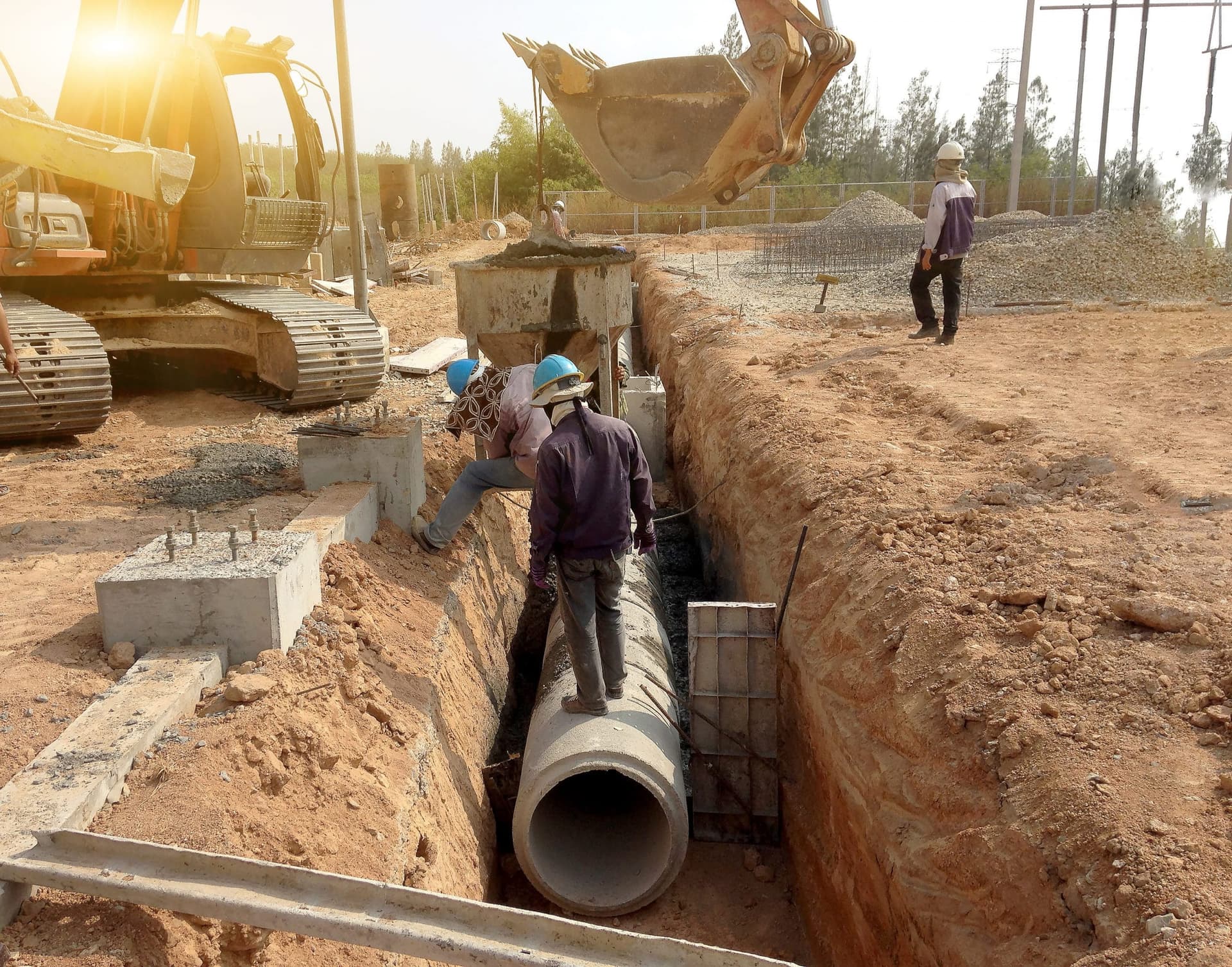
| Depth and length | Deep trenches need shoring and more excavation; long runs need more pipe |
| What's on top | Breaking out and reinstating concrete, paving or a driveway costs more than lawn |
| Access | Pipes under the house, near boundaries, or where machines can't reach |
| Repair method | Spot repair, relining or full replacement suit different faults |
| Connections | Work on or near public connections needs approvals |
| Consent and inspection | New drains or re-routes generally need building consent |
| Ground conditions | Rock, groundwater and unstable trench walls slow the work |
Do drainage repairs need consent?
Drainlaying is restricted work: it must be carried out by a licensed drainlayer or someone they supervise. Repairs that replace parts with comparable components may be exempt from building consent. New drains, re-routing, new connections and new soakage generally need building consent. If you're unsure, ask the drainlayer to confirm before work starts.
Diagnose before you dig
Water jetting can clear a blockage, but if roots or a broken pipe caused it, it will come back. A CCTV camera inspection shows exactly where and what the fault is, so the repair is targeted:
- a cracked or displaced joint in one spot: a short dig-up and spot repair;
- root intrusion along a run: clear, then reline or replace;
- a sagging section (belly): re-lay at the right fall;
- an undersized or failing system: a redesign.
When to call someone straight away
- Wastewater overflowing at a gully trap or inside.
- A hole or sinking ground over a drain line.
- Water undermining a foundation, retaining wall or driveway.
- Flooding that reaches the house.
Ambient Civil installs and repairs stormwater, subsoil and soakage drainage and the earthworks around it. Tell us about the problem and we'll arrange a site visit.
Sources and further reading
General information only. Every site is different: consent, engineering and safety requirements depend on your property, so check with Auckland Council or a qualified professional, or ask us for a free site visit.
About this guide. Written by the Ambient Civil team: 22 in-house crew and 20+ years of civil construction, demolition and earthworks across Auckland. Rules and licence requirements are summarised from the official sources listed above and were checked on . Rules change, so confirm your property's position with Auckland Council or a qualified professional.
All guides->