Complete guide to civil construction in Auckland what it includes, difference from building work, when you need a specialist, and Auckland Council consent requirements.
Most Auckland homeowners encounter the phrase "civil construction" when they're planning a new driveway, dealing with a slipping bank, organising a subdivision, or preparing a site for a new home. But what does the term actually mean and how is it different from standard building work? Understanding this distinction can save you from hiring the wrong contractor, underestimating costs, or missing a critical consent requirement from Auckland Council.
What Does Civil Construction Include?
Civil construction is a broad discipline covering all works related to land, external infrastructure, and site preparation. In Auckland, this typically encompasses:
- Earthworks and excavationcutting, filling, levelling, and reshaping land for development or drainage purposes.
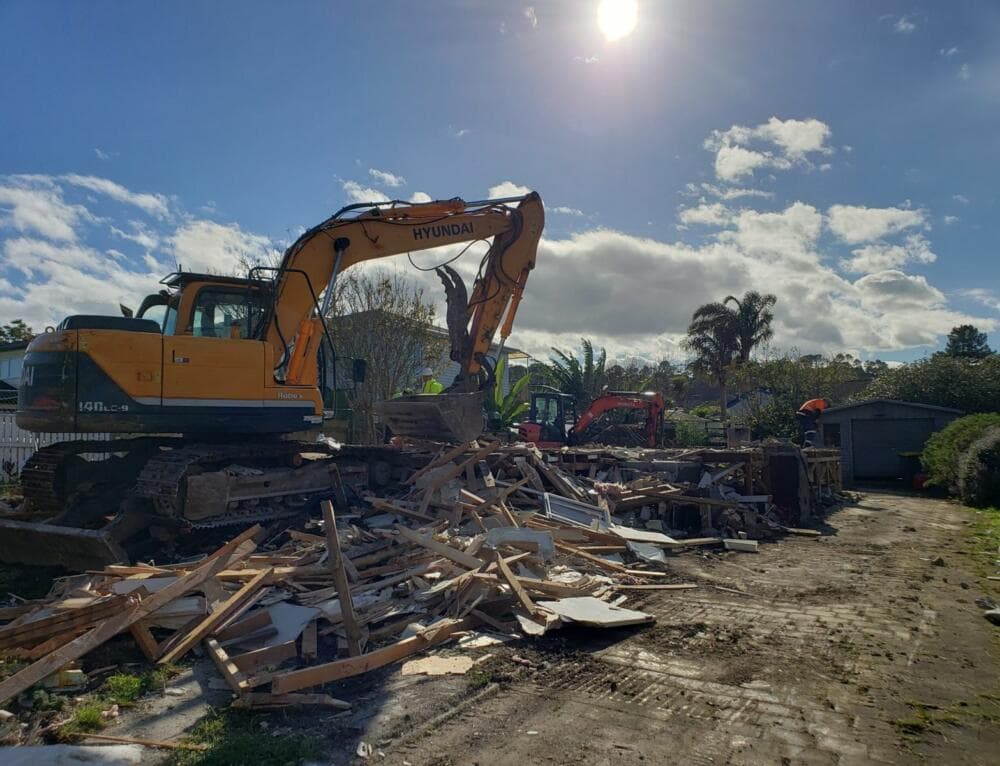
- Demolition removing existing structures, slabs, or infrastructure to clear a site for new development.
- Drainage and stormwater managementinstalling sub-surface ag pipe, stormwater connections, French drains, channel drains, soakage systems, and retention systems.
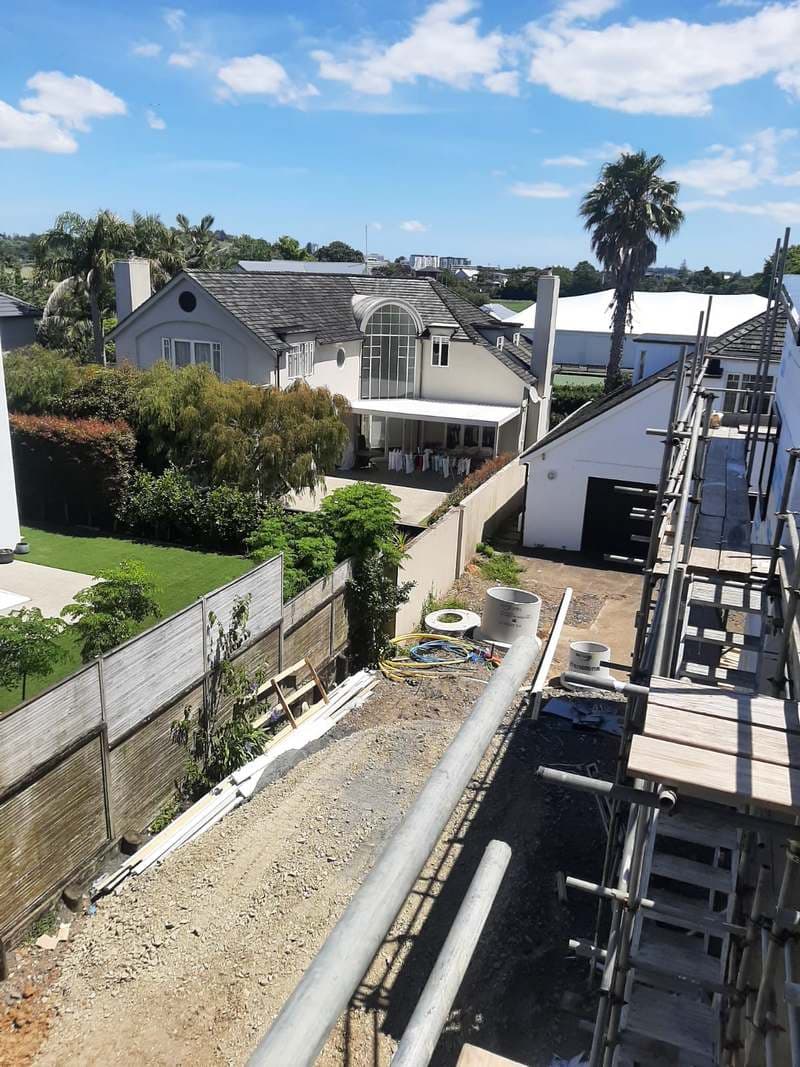
- Retaining walls constructing engineered walls to stabilise sloped sections and prevent erosion on Auckland's hilly terrain.
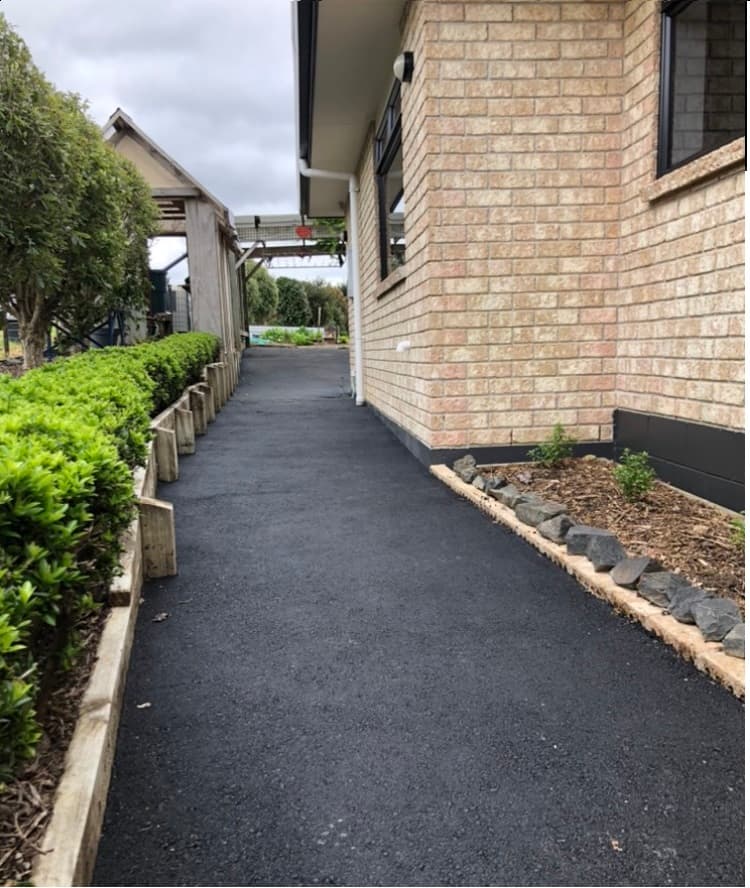
- Driveways and access roads laying asphalt, concrete, chip seal, or paver surfaces for vehicle access.
- Concreting and block laying outdoor concrete pads, pathways, concrete block construction, and related masonry work.
- Landscaping topsoil management, ground preparation, and external land works in support of construction.
- Fencing structural fencing for site security, boundary definition, and amenity.
It is equally important to understand what civil construction does not include: it is not plumbing, electrical, or building framing. Those disciplines fall under the Building Act 2004 and are carried out by licensed building practitioners and registered tradespeople. Civil construction sits in a complementary but distinct category it shapes and prepares the land and external infrastructure that buildings ultimately sit on.
Civil Construction vs Building Construction What's the Difference?
The simplest way to understand the distinction is this: building construction is about structures you live or work in; civil construction is about the land, infrastructure, and external works those structures depend on.
A building contractor will frame your walls, pour your floor slab inside the building, install roof trusses, and fit windows and doors. A civil contractor will clear the site, install drainage before the slab is poured, construct any retaining walls to create a level building platform, and lay the driveway once construction is complete. These two scopes frequently overlap particularly on new builds and subdivision projects which is why coordination between a civil contractor and a building contractor is essential.
In New Zealand, the lines are also drawn by regulation. The Building Act 2004 governs building construction and requires a Licensed Building Practitioner (LBP) for Restricted Building Work. Civil works, while not always requiring an LBP, have their own regulatory requirements under the Resource Management Act 1991, the Auckland Unitary Plan, and Auckland Council's engineering standards. Failing to understand this distinction can result in the wrong consents being applied for or important work being done without any consent at all.
Why Do Auckland Homeowners Need Civil Contractors?
Auckland's geography makes civil construction especially important. Unlike flat cities, Auckland is built on a volcanic field with uneven terrain, steep hillsides, and complex drainage catchments. The city's predominant soil type heavy Waitemata clay does not drain freely, which means water management is a constant challenge on virtually every residential property.
Common reasons Auckland homeowners engage civil contractors include:
- Preparing sloped sections for a new home, including cut-and-fill earthworks and building platform creation.
- Constructing retaining walls to stabilise banks, particularly after a neighbour's section has been excavated or after storm damage.
- Installing drainage systems to address chronic waterlogging or stormwater overflow.
- Clearing demolition debris after removing an existing dwelling prior to subdivision or new build.
- Constructing driveways and vehicle crossings compliant with Auckland Transport requirements.
- Subdivision earthworks shaping individual lot boundaries and building platforms across multiple titles.
In each of these scenarios, a specialist civil contractor brings equipment, expertise, and regulatory knowledge that a general builder simply does not have. Excavators, compactors, and drainage installation equipment require trained operators and a thorough understanding of Auckland's geotechnical conditions to deploy safely and effectively.
Do I Need Council Consent for Civil Works in Auckland?
The answer depends on the nature and scale of the work but for many common civil works in Auckland, the answer is yes, or at minimum, you need to check. Auckland Council administers consent requirements under both the Building Act 2004 and the Resource Management Act 1991 (via the Auckland Unitary Plan).
Building consent is typically required for retaining walls over 1.5m in height, or any retaining wall that sits within 1.5m of a neighbouring boundary. Driveways that cross the public berm or footpath require a vehicle crossing consent through Auckland Transport, which is separate from a building consent. Larger structures such as concrete block walls and engineered retaining systems will almost always require both consent and a producer statement from a Chartered Professional Engineer (CPEng).
Resource consent may be required for earthworks exceeding the permitted activity thresholds in the Auckland Unitary Plan typically 250m³ or more on most residential sites, or any earthworks within a Special Character, Coastal Marine Area, or flood-sensitive zone. It may also be required for work close to trees protected under the Unitary Plan's Significant Ecological Areas.
The prudent approach is to engage a civil contractor who understands Auckland's consent environment and can advise you at the earliest planning stage. Getting the consent pathway wrong adds weeks to your project timeline and can result in enforcement action from Auckland Council if work proceeds without approval.
What Should I Look for in an Auckland Civil Contractor?
Not all civil contractors are equal, and in Auckland's busy construction market it pays to ask the right questions before signing a contract. Here are the most important criteria to evaluate:
- Insurance : Look for a minimum of $5M public liability insurance. This protects you in the event of property damage or injury. Always ask for a certificate of currency before work commences.
- WorkSafe compliance : Your contractor should have a current Health and Safety Management Plan (HSMP) for any significant works and be able to demonstrate compliance with the NZ Health and Safety at Work Act 2015.
- Local knowledge : Auckland's soils, slopes, weather, and consent requirements are specific. A contractor with extensive Auckland experience will navigate these complexities far more efficiently than one accustomed to flat, free-draining soils elsewhere in New Zealand.
- Equipment ownership : Contractors who own their excavators, compactors, and drainage equipment are generally more reliable and cost-competitive than those who subcontract everything out.
- References and track record : Ask for recent project examples in Auckland. A reputable contractor will happily provide references from completed residential and commercial projects.
- Clear contract and scope : Beware of contractors who provide vague, single-line quotes. A professional civil contractor will provide an itemised scope of works, programme, and clear payment terms.
At Ambient Civil, we bring over 20 years of Auckland civil construction experience to every project. We are fully insured to $5M, NZ H&S compliant, and work extensively across all Auckland zones from North Shore subdivisions to South Auckland industrial sites to Central Auckland residential upgrades.See our Auckland coverage areaorrequest a free quote today.
Talk to Auckland's Civil Construction Experts
Whether you're planning a subdivision, need a retaining wall assessed, want a driveway installed, or simply need advice on your site's drainage, Ambient Civil's team is ready to help. We offer free, no-obligation site assessments across Auckland and can guide you through the consent process from start to finish. Call us on+64 22 196 9021orsubmit your project details onlinefor a fast response.
For more practical guides, read our post onhow demolition works in New Zealandor explore ourearthworks and excavation service.
Common Questions About Civil Construction in Auckland
What is the difference between a civil contractor and a builder?
What civil construction work requires consent in Auckland?
Is earthworks the same as civil construction?
Do I need a licensed contractor for civil works in Auckland?
How much does civil construction cost in Auckland?
What is the NZ Health and Safety at Work Act 2015?
Authoritative NZ Resources
Table of Contents
- Introduction
- What Does Civil Construction Include?
- Civil vs Building Construction
- Why Auckland Homeowners Need Civil Contractors
- Do I Need Council Consent?
- Choosing an Auckland Civil Contractor
- Common Questions (FAQ)
Talk to Auckland's civil construction specialists no obligation, no cost.
Related Articles
Ready to Start Your Auckland Civil Project?
Ambient Civil provides free site assessments and detailed quotes across all Auckland zones. $5M insured, NZ H&S compliant.