What's included in an earthworks quote?
| Item | What it covers |
|---|---|
| Establishment | Getting machines, trucks and crew to site; site set-up |
| Service locating | Finding underground power, gas, water, telecommunications and drains before digging |
| Erosion and sediment control | Silt fences, a stabilised site entrance, keeping sediment out of drains and off the road |
| Topsoil strip | Removing and stockpiling topsoil for reuse |
| Cut (excavation) | Digging to design levels for a building platform, driveway, pool or foundations |
| Fill and compaction | Placing and compacting fill in layers, with testing where it's engineered fill |
| Cartage and disposal | Trucks and tip fees for spoil that leaves the site |
| Rock | Breaking and removing rock, usually priced separately |
| Dewatering | Pumping groundwater out of excavations |
| Engineering observation | Inspections and test results the engineer needs to sign off fill or foundations |
| Reinstatement | Topsoil back, grading and tidy-up |
What makes earthworks cost more?
| Cost driver | Why it matters |
|---|---|
| Volume | More cubic metres means more machine time and more truckloads |
| Spoil disposal | Clean soil can go to cleanfill; contaminated soil has to go to a managed fill or landfill at a higher cost |
| Rock | Auckland's volcanic areas have basalt close to the surface; breaking it is slow |
| Ground and water | Soft clay, groundwater and wet weather slow work and can need dewatering or extra base material |
| Access | Tight access means smaller machines and smaller trucks, so more hours and more trips |
| Distance to tip | Every load's travel time is in the price |
| Consent conditions | Erosion and sediment controls, monitoring, and limits on working in wet months |
| Engineering requirements | Engineered fill under buildings needs controlled placement and testing |
Why does excavated soil take up more room than the hole?
Soil in the ground (bank volume) is compacted. Once it's dug up it loosens and bulks, so the loose volume on trucks is larger than the hole it came from, and clay bulks a lot. Quotes should say whether they're priced on bank or loose volume, and whether cartage is priced per load or per cubic metre. Otherwise two quotes for the same job can look very different.
Where does the spoil go?
- Cleanfill accepts uncontaminated natural material. It's the cheapest option.
- Managed fill accepts soil with low-level contamination within the facility's limits.
- Landfill for material that can't go anywhere else.
If the site has had a hazardous activity in its past (a former orchard, market garden, fuel tank or workshop, for example), the soil may need testing before it can leave the site, and national rules may apply. See the contaminated land and HAIL guide.
Do you need consent for earthworks?
It depends on your zone, any overlays, and the total area and volume disturbed. Earthworks are controlled by chapter E12 of the Auckland Unitary Plan. Our earthworks consent guide explains the thresholds and how to check your site. Consent conditions such as sediment controls and wet-season limits affect both cost and programme.
Which machine size suits the job?
| Machine | Typical use | Cost effect |
|---|---|---|
| Mini excavator (around 1.5 to 3 tonnes) | Tight access, trenching, landscaping, small footings | Gets in anywhere, but moves less per hour |
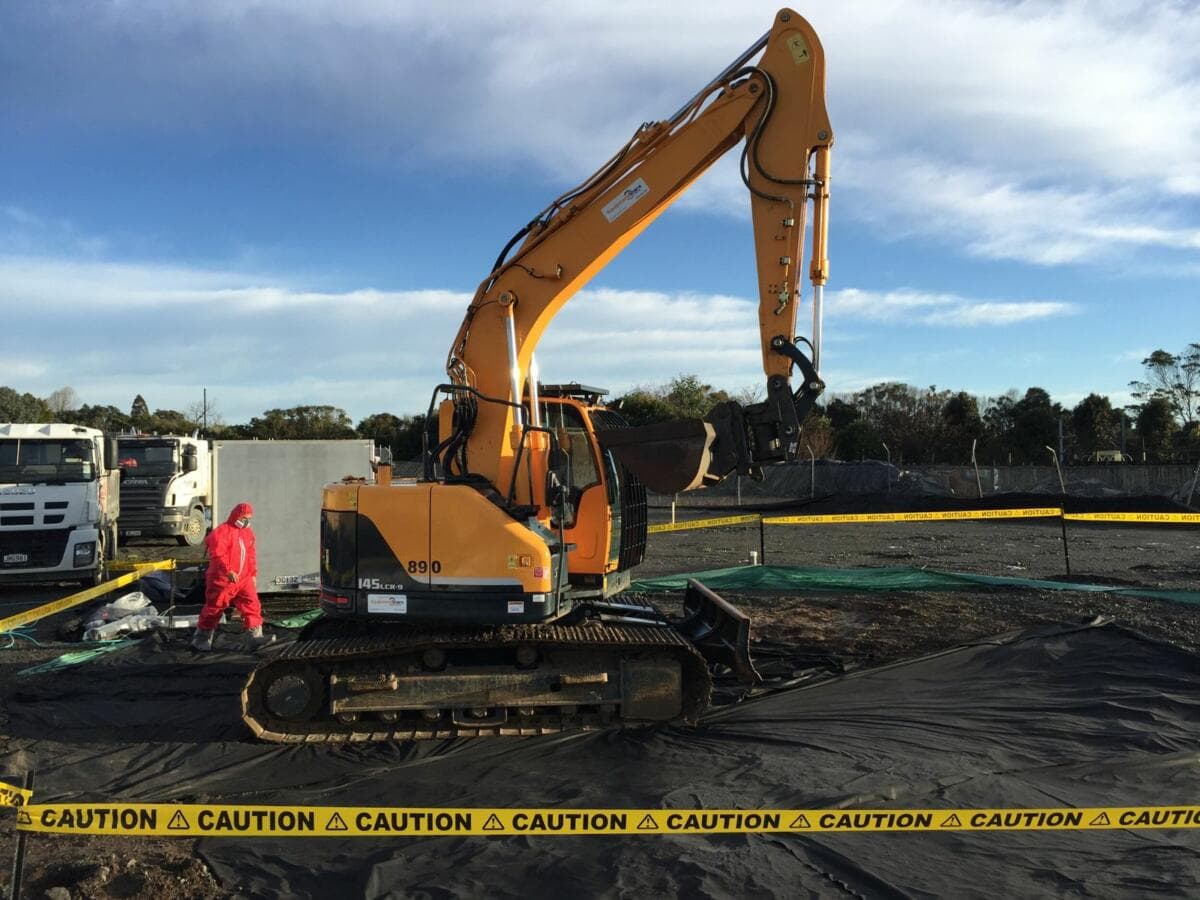
| Midi excavator (around 5 to 8 tonnes) | House sites, driveways, drainage, retaining | The usual workhorse for residential sites |
| Larger excavators and dump trucks | Bulk earthworks and subdivisions | Fastest per cubic metre, but needs space and access |
The right machine is the biggest one the site can safely take. A small machine on a big job costs you hours.
How weather affects earthworks
Auckland clay turns to mud in wet weather, which can stop work, damage the ground and wash sediment into drains. Allow for weather in the programme. Many consented earthworks also have conditions about working in the wetter months, so check yours before planning a winter start.
How to get an accurate earthworks quote
Send:
- plans with existing and finished levels, or a site plan with the area to dig;
- any geotechnical report;
- photos of the access, including driveway width and overhead lines;
- what's going on the platform (a house, a driveway, a pool);
- any consent conditions you already have.
We price earthworks from plans and a free site visit, with rock, groundwater and contamination shown as clear provisional sums so you can see how unknowns are handled. Ask for a quote.
Sources and further reading
General information only. Every site is different: consent, engineering and safety requirements depend on your property, so check with Auckland Council or a qualified professional, or ask us for a free site visit.
About this guide. Written by the Ambient Civil team: 22 in-house crew and 20+ years of civil construction, demolition and earthworks across Auckland. Rules and licence requirements are summarised from the official sources listed above and were checked on . Rules change, so confirm your property's position with Auckland Council or a qualified professional.
All guides->