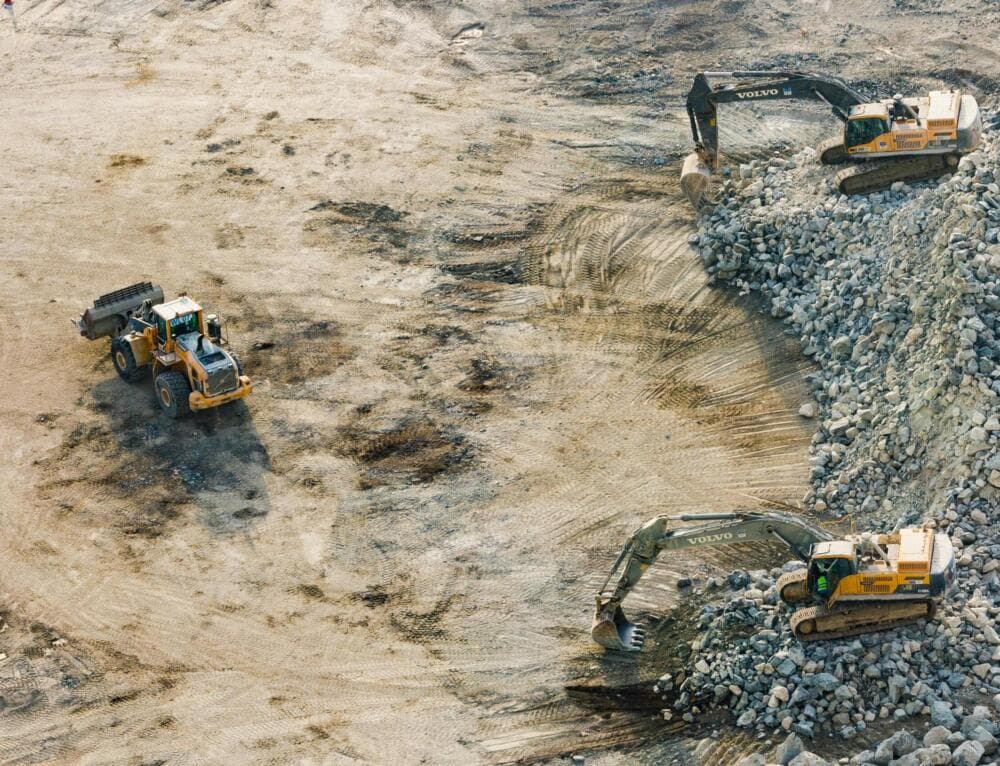
What size digger do you need?
| Class | Typical work | Watch for |
|---|---|---|
| Around 1.5 to 2 tonnes | Tight access, landscaping, trenching, small footings, inside sections | Limited reach and lift; slow on bigger digs |
| Around 2.5 to 3.5 tonnes | Residential drainage, footings, small retaining, driveways | The most versatile size for home-sized jobs |
| Around 5 to 6 tonnes | House sites, larger trenches, loading trucks | Needs a heavier trailer and towing vehicle |
| Around 8 tonnes | Bigger excavation and site work | Usually needs a truck to move it |
Before you choose, measure the narrowest access you'll need to get through, and think about what you'll tow it with. The right size is the one that does most of your work and can get to it.
Hours and service history
The hour meter tells you how long the engine has run, not how well the machine was looked after. A machine with more hours and a full service history can be a better buy than a low-hour machine with no records. Ask for:
- service records showing oil and filter changes, including hydraulic oil and filters;
- records of major repairs (pins and bushes, tracks, hydraulic pump or motors);
- the hour meter reading, and whether it has ever been replaced.
Undercarriage checklist
The undercarriage is the most expensive wear item on a tracked machine.
- Rubber tracks: cracks, cuts, missing lugs, exposed steel cords.
- Steel tracks: worn grousers, stretched chains, loose pins.
- Sprockets: hooked or sharp teeth mean wear.
- Rollers and idlers: oil leaks, flat spots, rollers that don't turn.
- Track tension: check for excessive sag, and whether the adjuster holds.
- Tracking: drive it in a straight line both ways; it shouldn't pull to one side.
Boom, arm and bucket
- Pins and bushes: with the bucket on the ground, move the arm and watch for play at each joint. Slop means wear.
- Cracks and welds: look closely at the boom, arm and bucket for cracks or repair welds.
- Bucket: worn teeth and cutting edges are cheap; a cracked or rebuilt bucket is a question.
- Quick hitch: check the locking mechanism and any secondary safety lock work properly.
Hydraulics
- Leaks: hoses, fittings, cylinders, the pump and the swing motor.
- Cylinder rods: pitting, scoring or rust damages seals.
- Drift: raise a loaded bucket and stop. It shouldn't creep down.
- Swing: smooth in both directions, with no clunk or play in the slew ring.
- Speed and power: functions shouldn't be slow or weak when the oil is warm.
Engine and cab
- Cold start: ask that the machine isn't warmed up before you arrive. Hard starting or heavy smoke is a warning.
- Smoke and blow-by: blue or heavy black smoke under load, or fumes from the breather, mean engine wear.
- Coolant and oil: check levels and look for oil in the coolant, or milky oil.
- Cab or canopy: the rollover and falling-object protection structure must be intact and unmodified, with a working seatbelt.
- Gauges and warning lights should all work.
Paperwork and the PPSR search
- Search the Personal Property Securities Register (PPSR) by the machine's serial number before you buy. If a finance company has a registered security interest, the machine could be repossessed even after you've paid for it.
- Check the serial number on the machine matches the paperwork.
- Get a proper invoice showing the seller's details, the serial number and GST.
- Confirm the seller owns it.
Transport
Check the combined weight of machine, attachments and trailer against your trailer's rating, your towing vehicle's limits and your driver licence class. Use rated tie-downs at the machine's tie-down points. Many first-time buyers find the transport costs more than they expected.
Attachments add value
Extra buckets (trenching, mud or tilt), a ripper, an auger or a hydraulic hitch can add real value to a deal, and buying them separately later costs more. List what's included.
Buying from Ambient Civil
We sell site-tested mini and midi excavators, from around 1.5 tonnes to 8 tonnes, that we've run ourselves, with their service history. You're welcome to come and see a machine work before you buy. See the machines for sale or ask about a machine.
Sources and further reading
General information only. Every site is different: consent, engineering and safety requirements depend on your property, so check with Auckland Council or a qualified professional, or ask us for a free site visit.
About this guide. Written by the Ambient Civil team: 22 in-house crew and 20+ years of civil construction, demolition and earthworks across Auckland. Rules and licence requirements are summarised from the official sources listed above and were checked on . Rules change, so confirm your property's position with Auckland Council or a qualified professional.
All guides->